
Pregled
acetyl tetrapeptide -9 is a synthetic peptide substance composed of four amino acid residues (glutamic acid, aspartic acid, valine, histidine), which appears as a white powder at room temperature. The N-terminal of the substance is modified by acetylation. This structure gives it good stability and skin penetration. In addition, the substance can also activate dermal fibroblasts, increase the secretion of collagen and elastin, and improve skin firmness. It has a targeted effect on the relaxation of fragile areas such as eyes.
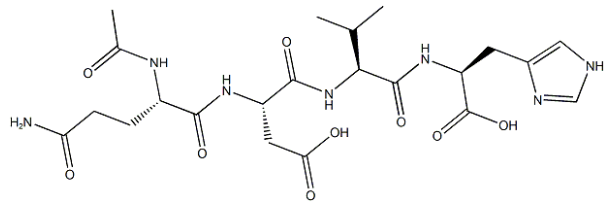
Chemical structural formula of acetyl tetrapeptide -9
with its increasingly widespread application in skin care products, efficient, economical and environmentally friendly synthesis and purification methods have become the focus of research in related fields. Although the traditional liquid phase peptide synthesis method can be used for fragment condensation, the steps are cumbersome and the total yield is low, which is difficult to meet the needs of industrialization. Moreover, it is difficult to achieve high resolution and high recovery rate at the same time in a single chromatographic separation. This paper provides a method for synthesizing acetyl tetrapeptide -9, which improves separation efficiency, resolution, and product purity and yield.
Osnovne informacije
chinese Name: Acetyl Tetrapeptide -9
english name: Acetyl Tetrapeptide-9
G Company No.: GT-C046
CAS No.: 928006-50-2
sequence: Ac-Gln-Asp-Val-His-OH
molecular formula: C22H33N7O9
molecular weight: 539.54
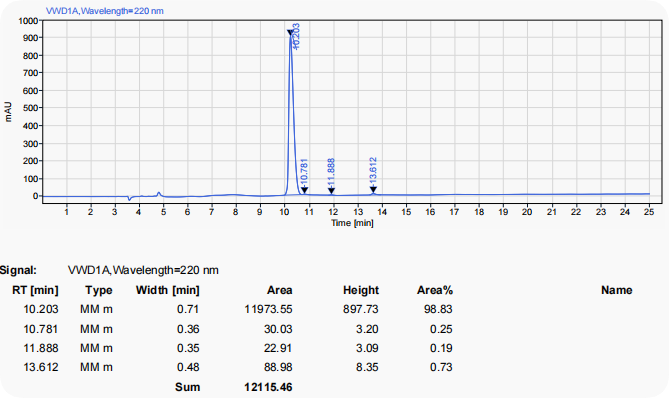
acetyl tetrapeptide -9 HPLC
synthetic method
1. Uzmite više čvrsto-faznih sintetičkih smola, dodajte sredstvo za bubrenje u mnoštvo čvrstih sintetičkih smola, dodajte sredstvo za kondenzaciju i sredstvo za aktivaciju da se otopi i ohladi, temperatura hlađenja je -10°C, a vrijeme hlađenja je 20-30 minuta; dodati sredstvo za kondenzaciju u ohlađeni sistem čvrste faze sintetičke smole i sredstvo za kondenzaciju i sredstvo za aktivaciju da se rastvori, upariti 2-5,5 sati i isprati da bi se dobio peptidni lanac. Da bi se maksimizirala inhibicija sporednih reakcija, poboljšala efikasnost spajanja i osigurala tačnost konačne sekvence peptidnog lanca.
2. Peptidni lanac se cijepa i odvaja, što uključuje: prijenos kompleksa peptidne smole, koji je sintetiziran u prethodnom procesu, potpuno ispran i osušen, u namjenski reaktor za cijepanje. Dodat je unapred pripremljen rastvor za lizu i ohlađen na nisku temperaturu, a reakcija je mešana na sobnoj temperaturi. Vrijeme reakcije se obično kontrolira na 2-3 sata. Ova blaga temperatura i dovoljan vremenski okvir osiguravaju da su reakcije cijepanja i uklanjanja zaštite potpune, dok minimiziraju razgradnju peptidnog lanca ili sporedne reakcije koje mogu biti uzrokovane dugotrajnim djelovanjem jakih kiselina. Nakon cijepanja, trifluorosirćetna kiselina se može koristiti za ispiranje i odvajanje da bi se dobio sirovi peptidni proizvod acetil tetrapeptid -9.
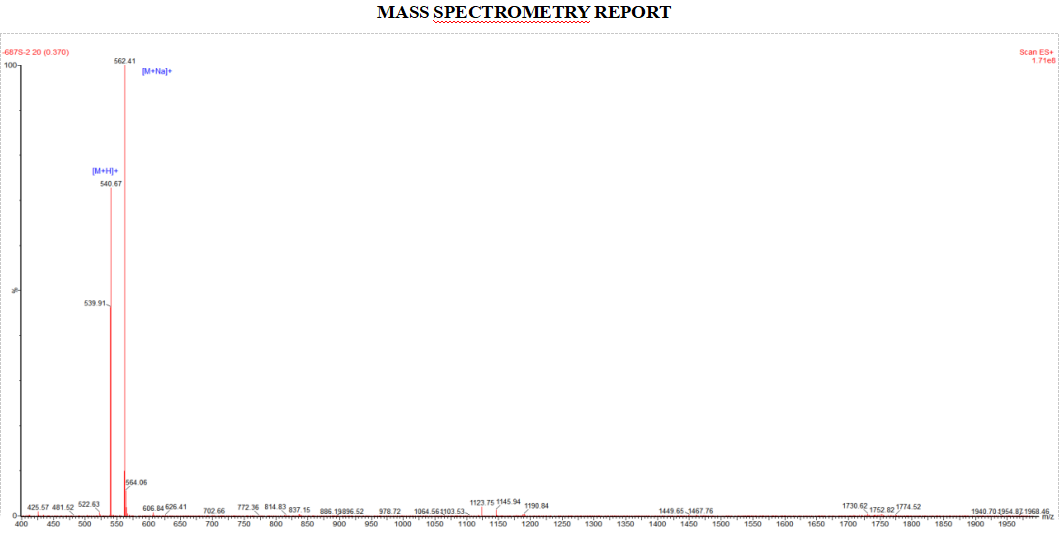
Acetyl tetrapeptide -9 MS
3. Dissolve and filter the crude target peptide with a small amount of phase A (trifluoroacetic acid aqueous solution), and then apply the sample to the first liquid chromatography column. The first liquid chromatography column may be a 300DAC dynamic column, the packing is Daiso-C18-8-100, the wavelength is 230nm, and the flow rate is 1600 mL/min. Through the first gradient elution of the first liquid chromatography column, the high-throughput, large-capacity preliminary separation is carried out, and most of the impurities with significant differences in physical and chemical properties from the target peptide are quickly removed.
4. The eluent fraction is loaded onto a second liquid chromatography column, and a second gradient transalting elution is performed using an eluent composed of phase A1 (aqueous ammonium acetate solution), phase A2 (aqueous acetic acid solution) and phase B (acetonitrile), and the refined acetyl tetrapeptide -9 is obtained after concentration and lyophilization.
Post time: 2026-10-20